Sometimes database professionals need to perform specific tasks at the operating system level. These tasks can be like copying, moving, deleting files and folders. A use case of these tasks might be removing the old backup files or copying backup files to a specific directory after a particular time.

In SQL Server, we can use xp_cmdshell extended stored procedure to execute commands directly in the Windows command prompt. You need a sysadmin role or proxy account configured to use this extended procedure. We can also use the SSIS package for the file transfer, but it also requires you to build a package with the relevant tasks. When you want to delete something via the Command Prompt, there are multiple scenarios.

For instance, you can delete a single file, delete multiple files, delete files with a specific extension, delete read-only files, etc. How do I safely delete all files with a specific extension (e.g. .bak) from current directory and all subfolders using one command-line? Simply, I'm afraid to use rm since I used it wrong once and now I need advice. Write the linux command to remove all files and directories from the current directory. It is essential to note that files and directories deleted using rm and rmdir are not transferred to the Trash.
They are instantly excluded from your computer. If you unintentionally delete files applying these commands, the only method you'll be capable of restoring them is from a backup. We have already covered how to search for a file in Debian.

In this article, I am going to demonstrate how you can delete files and directories using the terminal. There are several commands and I'll explain them one by one with examples. However, the commands and procedures mentioned below should be almost the same across different Linux distributions. It is important to note that files and directories deleted using rm and rmdir do not get moved to the Trash. They are immediately removed from your computer.
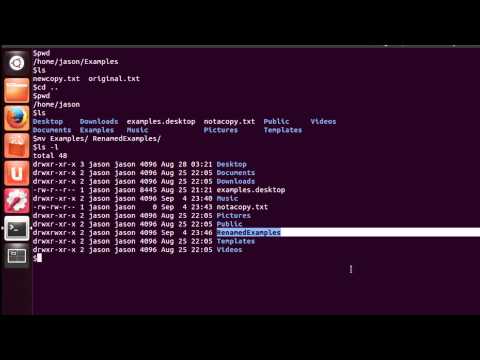
If you accidentally delete files using these commands, the only way you'll be able to restore them is from a backup. The rm andrmdir commands delete files and directories on Linux, macOS, and other Unix-like operating systems. They're similar to the del anddeltree commands in Windows and DOS. These commands are very powerful and have quite a few options. In this post I will show you couple of ways to bulk delete files with a specific extension in a folder and all its subfolders.
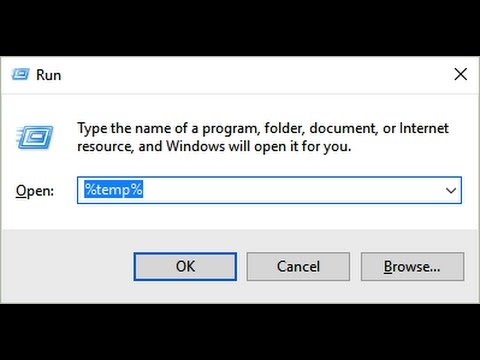
You won't mind manually deleting if there are only a few files/folders, but what if there are hundreds of such unwanted files stored in as many folders? We can avoid the pain by using a simple Command Prompt command. Or if you aren't comfortable with command line usage, scroll a bit further down for a software to achieve the same result. As we know Linux is slightly different from Windows for various tasks even in deleting files and folders.
And here we will see the quick Linux commands to delete a file and directory using the terminal. Regarding handling everyday tasks, the command line can turn out to be powerful as well as harmful. For instance, the rm command enables you to eliminate or delete files. The rmdir command works in the same manner for directories or folders.
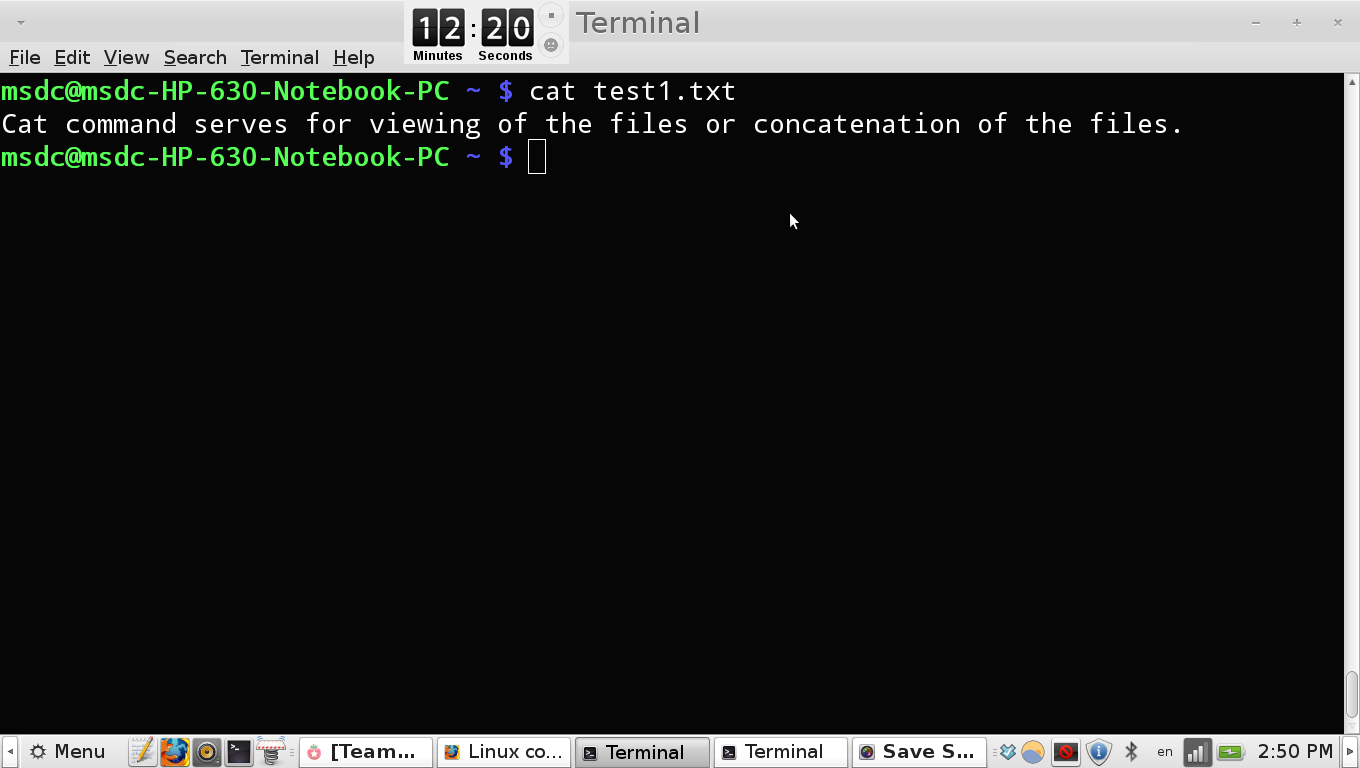
Delete all files and folders in current directory. The -v option on the rm command shows a message for each file that was deleted. To delete a file simply type Del followed by the name of your file along with its extension in quotes. Once again if you file is not located in the users directory or within any of its sub-directories you would need to start the command prompt as an administrator.

Using command prompt and PowerShell, you can do almost anything on Windows 10. Deleting a file or a bunch of files is nothing hard. Though you can easily delete files by pressing the Delete key on your keyboard, there might be times when you need to use the commands to delete files. In this quick tutorial we'll go over how to open Command Prompt, some basic commands and flags, and how to delete files and folders in Command Prompt. It may be necessary to delete all files in a folder except files meeting specific criteria.
On this page, we help with deleting all files in a directory that do not have a specific file extension. Delete Files of Specific Extension with Folder Cleaner. Folder Cleaner is a free software which allows users to delete files from multiple folders on your computer and from network devices in batches. It functions using file filters – this lets you include and exclude files based on its extension. In this article, we will show you how to delete files in a directory except certain file extensions or types using rm, find and globignore commands. Whatever command you like to delete files and directories, these commands lend themselves very well to being added in shell scripts.

For example, a cron job triggers a script that can help automate routine housekeeping jobs, such as cleaning undesired log files. Only remember of the potential of these commands, test everything delicately, and always keep an up-to-date backup. You can delete multiple files with the single rm command.

The syntax of the complete command should be as follows. In this article, we explored the new stored procedure to copy and delete the files in the SQL Server 2019. It gives us the flexibility to do specific OS tasks without using the extended stored procedure xp_cmdshell. You should explore these T-SQL commands in your environment and modify it if it is still using the xp_cmdshell for copy and delete files.

Here, 'filename1', 'filename2', etc. are the names of the files including full path. Hopefully you can see how easy it is to delete files and folders within your local folders at scale. The simplest case is deleting a single file in the current directory. Type the rm command, a space, and then the name of the file you want to delete.

Deleting files is one of the frequently done operation from Windows command prompt. This post explains how to use 'del' command from CMD for different use cases like deleting a single file, deleting files in bulk using wild cards etc. Before we start to look at the syntax, note that the command works only for files and can't handle folders. If the file is not in the current working directory, provide a path to the file's location. You can pass more than one filename to rm . Doing so deletes all of the specified files.

To do this, start by opening the Start menu , typing run , and hitting Enter. In the dialogue that appears, type cmd and hit Enter again. With the command prompt open, enter del /f filename , where filename is the name of the file or files you want to delete. Note that this will delete the folder recursively in its entirety, i.e., it will delete the entire folder structure beneath it; the subfolders and all the files.

Hence, there is no way to delete specific files with a pattern of filenames, or files with a specific extension recursively. Every time the entire folder structure is deleted. I never used that command to delete files daily, but it is good to be aware of all our alternatives.

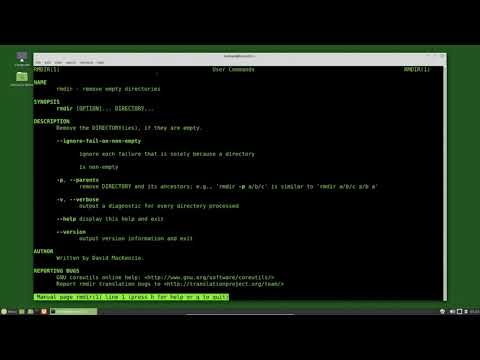
In addition, there are specific scenarios where the unlink could be better and useful for scripts and automation tasks. For example, you could use it to provide more security for the automatic tasks done by Shell Scripts to delete and limit the number of files safely. When rmdir shows a "Directory not empty" error, it stops processing the directories that were passed to it on the command line. So, for example, if you've asked it to delete two folders and the first one had files in it, rmdir would show you the error message and do nothing more. You can apply it to overlook these errors with the –ignore-fail-on-non-empty option to process other directories.
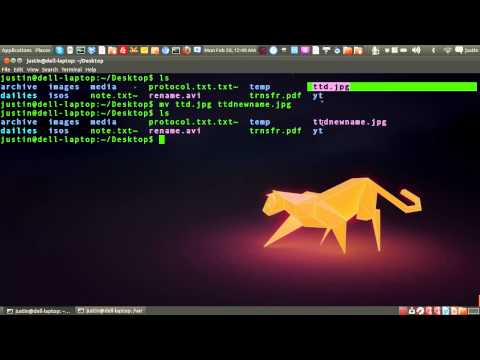
If you want to delete multiple empty directories inside your current path, you can delete them with single rm command as follows. Suppose you want to delete a file test.txt in your current directory, use the -i option in rm command as follows. Therefore, under the standard sudo user, we can use the command terminal to easily delete and files and folders including the empty ones.
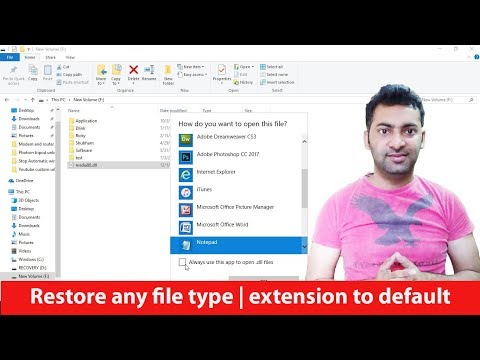
With this tutorial, deleting files and directories in Linux was made easy. The rm and rmdir commands are flexible with many options available. If you are looking to delete files that have a specific file extension then you can use the below command. Don't forget to replace "fileExtension" with the actual file extension, like png, jpg, zip, etc.

There are two ways to delete multiple files in the command prompt. In the first method, you will specify all the file names manually. This gives you better control over the files you delete. Write a script that deletes all the regular files with a .js extension that are present in the current directory and all its subfolders. Before starting the deletion process, the program allow you to pre-analyze the chosen search criteria.

So, if any unwanted result is found, you can correct it before actually executing the task. Another useful option is the possibility to delete files to Recycle Bin, which is not possible in the command line method. Here's where we would use the "rm" command.

You can also remove empty directories with the "rm" command, so you can always use that one. We used the option "-r" to recursively delete all subdirectories and files in the parent directory. If you don't use the "-r" option, you will only delete a single file. Removing Directories If the directory still contains files or subdirectories, the rmdir command does not remove the directory. To remove a directory and all its contents, including any subdirectories and files, use the rm command with the recursive option, -r . Others may have no alternative in the matter.
They may be running on servers without a GUI placed or on a remote session onto a headless system, for example, a Raspberry Pi device. These commands are excellent for that group of people. Like we saw before, you need to confirm before the rm command deletes write-protected files.
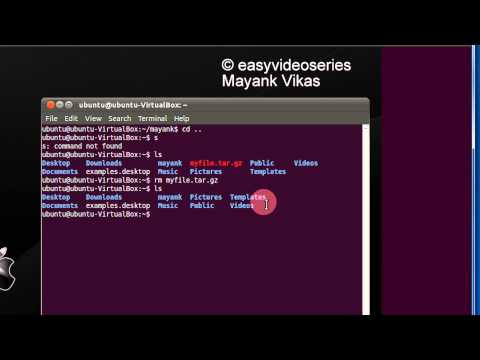
To delete directories that contain several sub-directories and files and suppress these confirmation messages, use the -r and -f options. How to use command prompt and command line to delete files easily? Follow this guide to delete files using command direction on Windows and Mac. To delete multiple files at once, simply list all of the file names after the "rm" command.

Depending on whether you want to delete a single file, multiple files, or all of the files of a certain file type, the "rm" command will look slightly different. DELTREE - Older versions of Windows had the DELTREE command to delete all files and sub folders. This can be replicated with a script as shown on the DELTREE page.
Some people prefer to have a workflow that revolves around the terminal. They may be working on servers without a GUI installed or on a remote session onto a headless system such as a Raspberry Pi. These commands are perfect for that group of people. In the following example two folders have been passed to rmdir, these are work/reports and work/quotes .

The --ignore-fail-on-non-empty option has been included in the command. The work/reports folder has files in it, so rmdir cannot delete it. The --ignore-fail-on-non-empty option forces rmdir to ignore the error and move on to the next folder it needs to process, which is work/quotes. This is an empty folder, and rmdir deletes it. If you prefer command-line methods, Windows 10 offers a couple of commands to help you delete your files and folders from a Command Prompt window. We'll show you how to perform this deletion.

In the example above, the command is deleting all files in the current directory, except files with the file extension .tiff. In the example above, the command is deleting all files in the current directory, except files with the file extension .tiff and .jpg. The rm command can remove multiple files at once either by passing it more than one file or by using a pattern. In the following example a pattern is used to remove all filenames ending in '. Be careful that no unwanted files are removed using this method.
To delete a file or folder, right-click its name or icon. This surprisingly simple trick works for shortcuts, files and folders, and just about anything else in Windows. To delete in a hurry, click the offending object and press the Delete key. Once all the files you want to keep are highlighted, on the Home Tab, click Invert Selection to select all other files and folders.